Estate Finca or Family Farm? Choosing Your Antigua Coffee Tour
Short answer. An estate if you want the full industrial line, a shop and a car park: more machinery, more polish, and a guide who does this daily. A family farm if you want the grower: fewer stages mechanised, more of them done in front of you, and a cup in somebody's kitchen. They cost about the same.
Every coffee morning around Antigua is one of two things, and no listing tells you which. Three of them drive to a commercial estate with a cultural centre and an admission gate; seven go out to a village and put you with the family who own the plot. That is the biggest difference between two mornings that look identical on a price grid, and it is worth ten minutes before you book. Every coffee farm tour Antigua Guatemala on the market falls on one side of the line.
What is an estate finca, exactly?
A working plantation of some scale that has built a visitor operation alongside the farming. Around Antigua that means Finca La Azotea in Jocotenango, ten minutes north of town: coffee under shade, a wet mill, drying patios and a cultural centre on the same grounds with a coffee museum and a collection of Maya instruments.
You arrive by vehicle or on a bicycle, you are met by a guide whose job is showing visitors round, and you walk a marked route. There is somewhere to buy a bag, somewhere to get a coffee afterwards, and a toilet block. Three departures reach it: the ATV morning, the gastronomic bike morning and the private fincas tour.
What is a family farm morning?
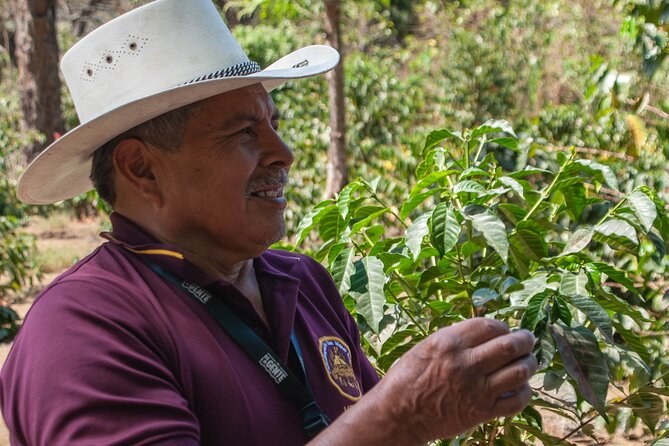
A smallholding of a few hectares, usually in Ciudad Vieja, San Pedro Las Huertas or San Miguel Escobar, where the person walking you round is the person who planted the trees. The mill may be a depulper bolted to a wall; the drying patio is often in front of the house; the roast happens in the kitchen on a comal over a fire.
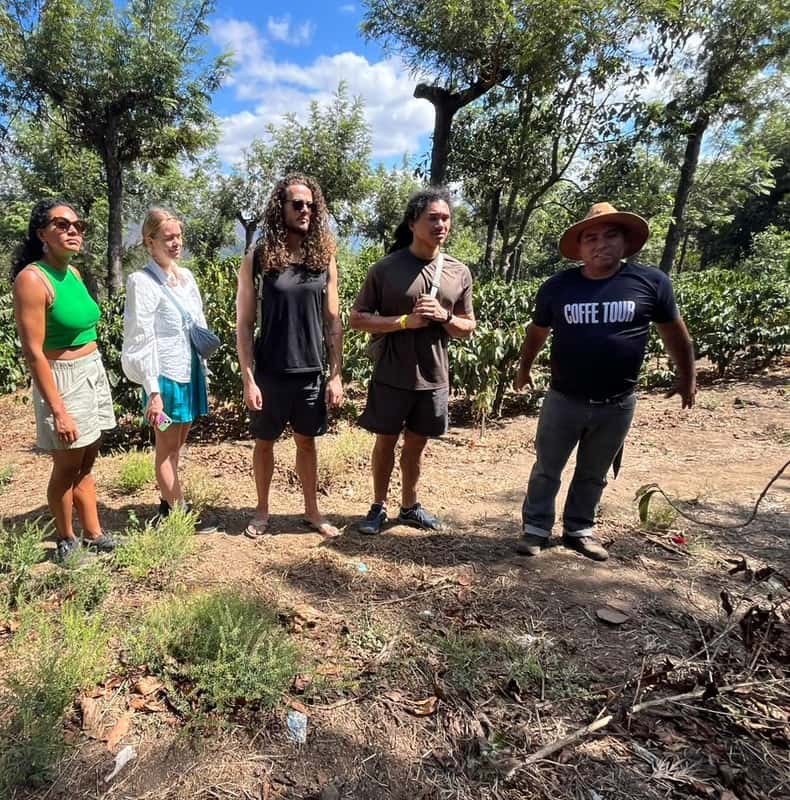
You are driven out, you walk the plot, and you finish at somebody's table with a cup and something to eat with it. Seven of the departures work this way, sold by six different operators, and the co-operative morning is the clearest example of the model. The farms page names each place.
Side by side
| Estate finca | Family farm | |
|---|---|---|
| Where | Jocotenango, ten minutes north | Ciudad Vieja, San Pedro Las Huertas, San Miguel Escobar |
| Who shows you round | A guide who does this daily | The grower, often with a translator |
| Time on the plots | 1.5–2 hours | 1–3 hours |
| The mill | A building, at scale | A depulper and a slab, in the yard |
| The roast | Demonstrated | In the family kitchen, usually over a fire |
| Facilities | Shop, café, museum, toilets | Whatever the household has |
| Admission | Charged at the gate on one departure | Inside the fare |
| Fares | $53 – $60 | $38 – $122 |
Which one costs more?
Neither, reliably. The cheapest morning in the valley is a bicycle ride to an estate at $38; the most expensive is a mountain bike day to a co-operative member's own farm at $122. In between, the estate mornings sit at $53 to $60 and the family mornings run from $45 to $82.
What does vary is what the fare covers. Every family farm morning includes the farm itself; the private fincas tour excludes admission to both estates it visits, so you pay at each gate on top of the fare. The cost guide takes the whole ladder apart.
🌿 Did You Know? Antigua is one of eight coffee regions Anacafé defines, and its cup profile is revalidated year by year by the association's own laboratory. That standard applies to an estate and a smallholding equally — the name is about the ground, not the size of the business.
Which gives you more time on the plots?
The family farms, on average, and by a wider margin than the fares suggest. One village morning gives you three hours; the estate mornings give you an hour and a half to two. That said, the bicycle morning to the estate gives two hours, which beats several of the village options.
The number is worth checking rather than assuming, and Antigua Coffee Tours shows it for every departure. If the plots are the point, the walk-through post explains what the extra time actually buys.
Do you see different things?
Broadly the same line, at different scales. Both take you through the nursery, the plots, the mill, the drying patio and the roast — the process page follows it in order.
What changes is what each stage looks like. An estate's mill is machinery you watch; a smallholding's is a machine you are handed. An estate's patio is a concrete apron the size of a tennis court; a family's is the yard, and somebody's mother is raking it. Neither is more authentic than the other, but they leave different impressions.
Who should take the estate?
- Anyone who wants the whole industrial picture. The wet mill and the drying floor at scale explain the crop in a way a yard cannot.
- Anyone travelling with mobility considerations. Estate paths are made, and there are toilets and somewhere to sit.
- Anyone who wants to buy properly. A shop with several roasts and a café to taste them in.
- Anyone short of time. Ten minutes from town rather than thirty.
- Anyone on a bicycle or an ATV. Both formats go to the estate, and neither goes to a village smallholding.
Who should take the family farm?
- Anyone who wants the grower's own story. Three generations of it, usually, and it is the part people remember.
- Anyone who cares where the money goes. A co-operative morning pays the household directly.
- Anyone who wants to do the work. Picking, roasting on a comal, grinding by hand — a smallholding hands you all three.
- Anyone travelling with children. Short walks, a fire and a hand mill beat a marked route — the with-kids post covers the limits.
- Anyone who wants three hours rather than ninety minutes.
Does it matter for the coffee you buy?
It changes the transaction more than the cup. Both sell you beans at a better price than town, both grow under Anacafé's Antigua designation, and both roast to order. On an estate you buy from a shop with several lots; on a smallholding you buy the one lot that family made.
The smallholding bag is more interesting and less consistent. Ask when it was roasted and which plot it came from — the tastings page covers what else to ask.
What about the two bicycle mornings?
They straddle the line, which is worth knowing. The cheaper one rides to the estate and adds a handicrafts market; the mountain bike day rides out to a co-operative member's own farm and finishes with lunch in the family's kitchen.
So if you want a family farm and a bike, there is exactly one option and it is the most expensive morning in the valley. The formats post compares the three ways of getting there.
What about the group size?
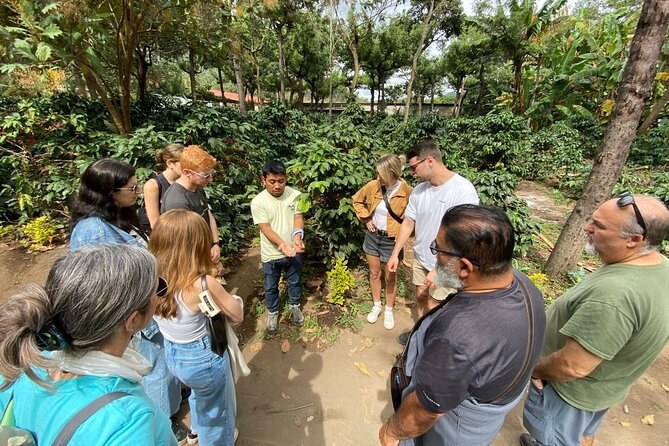
This is the difference nobody prices in, and it decides how much of the morning is actually yours. Most departures cap at ten travellers or fewer; one caps at twenty and one at fifteen. On a plot with a grower explaining a year of work, the gap between four visitors and twenty is enormous.
The estate mornings run larger by nature, because the route is designed to move people through it. The village mornings are smaller because a smallholding cannot hold a coach party, and one of them regularly runs with two travellers or three. If the conversation is what you are buying, the cap is the number to read before the fare.
Can you do both?
In two mornings, easily, and it is the best use of two days in Antigua that involves coffee. Take the estate first for the scale and the vocabulary, then a smallholding, and the second morning lands completely differently because you know what you are looking at.
In one day, no. Every departure here is a morning, and two of them back to back is a long day with a lot of driving in it. The itinerary guide builds the day three ways.
What if you only have one morning?
Take a family farm. The scale of an estate is the easier half to picture without seeing it — a bigger mill, a bigger patio, more machinery doing the same jobs — while a grower's account of a year of their own work is not available anywhere else and is the part visitors describe when they get home.
The exception is if somebody in your party needs made paths, a toilet block and somewhere to sit, in which case the estate is the kinder morning and no less genuine for it. The second exception is a bicycle: if you want to ride, the estate is where the cheaper of the two bike mornings goes.
Either way, book something with two hours or more on the plots. That is the number that separates a morning you remember from an hour you enjoyed, and it varies more between departures than the fare does.
Frequently asked questions
Is a family farm morning less professional?
No, but it is less rehearsed. A grower explains their own work rather than delivering a script, and the ratings on the smallholder listings sit at 4.9 and 5.0. What you lose is the polish; what you gain is the person.
Which one is better value?
The family farms, narrowly, because more of the fare reaches the household and you usually get longer on the plots. The bicycle morning to the estate is the exception and is the cheapest thing here at $38.
Do the estates have a coffee museum?
Finca La Azotea has a cultural centre on the same grounds, which includes a coffee museum and a collection of Maya instruments. One departure includes it in the visit and one excludes the admission, so check the listing you book.
Can I visit a smallholding without a tour?
Very rarely. These are private houses and working plots rather than businesses with an opening time — the guide to going alone sets out exactly what is and is not possible.
Which should a first-time visitor book?
A family farm, if you are only doing one. The scale of an estate is easier to picture from a book than a grower's account of a year is, and the smallholding mornings are the ones travellers describe afterwards.
Next: once you have chosen a side, pick the month on the harvest calendar.
One of each, side by side