Inside an Antigua Coffee Farm: Nursery, Patio, Beneficio and Roast
Short answer. A farm morning moves through five places: the nursery, the plots, the wet mill, the drying patio and the roasting room. Two hours covers all of them at a walk. The roast is the part you will remember and the mill is the part that explains the cup.
A coffee farm is not one place. It is five, laid out in the order the bean travels through them, and a good morning walks you along that line rather than talking about it. This is where you actually stand, in what order, and roughly how long each part takes. Booking an Antigua coffee plantation tour gets you through all of it with somebody explaining as you go.
Where you spend the time
| Where | What happens there | How long |
|---|---|---|
| The nursery | Seedlings under shade cloth, a year before planting | 5–10 minutes |
| The plots | Trees, shade, cherries at whatever stage the year has them | 30–60 minutes |
| The wet mill | Depulping, fermentation, washing | 15–20 minutes |
| The drying patio | Beans raked by hand for a week or two | 10 minutes, longer in season |
| The roasting room | Comal over a fire, hand mill, and the cup | 20–30 minutes |
The nursery, and why nothing here is quick
You usually start at a bed of seedlings under shade cloth, and if you look closely at the youngest ones the seed husk is still stuck on top of the first pair of leaves. Growers call that the soldadito, the little soldier.
It is a five-minute stop that changes how you read everything after it. A seed spends the best part of a year becoming a seedling and three or four more before it fruits, so the tree in front of you was planted by somebody thinking about 2030.
Out on the plots
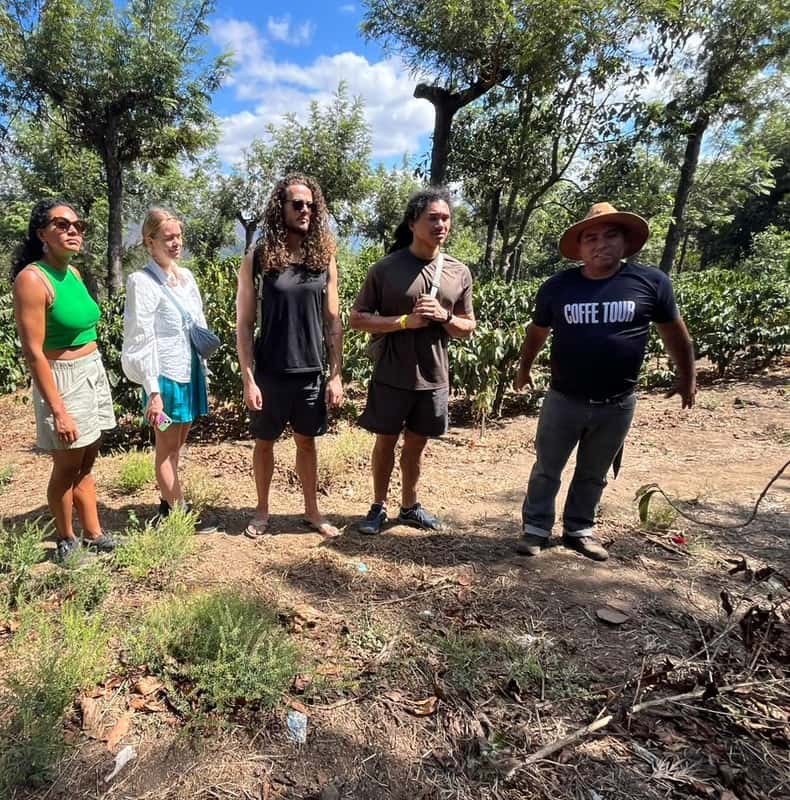
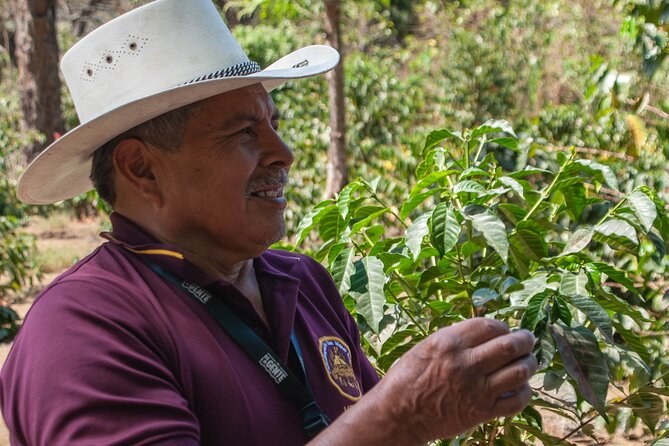
This is the longest part of the morning and the one that varies most between farms. You walk between the trees under taller shade, and the guide picks a branch to show you what is on it: white blossom in May, green fruit through the summer, red cherries from December.
The detail that surprises people is that one branch carries three colours at once. That is why every cherry here is picked by hand, and why pickers go over the same tree four or five times in a season. In harvest months you can try it yourself, and most people are startled at how slowly a basket fills.
🌿 Did You Know? The shade is deliberate. Taller trees over the coffee slow the cherry down, keep the soil cool and hold the birds — which is why walking a plot here sounds like a forest rather than a field. The process page explains what that does to the cup.
The wet mill, or beneficio
Beneficio is the word to listen for, and on a smallholding it can be a depulper bolted to a wall and a concrete slab in the sun. The cherries go in whole, the skin and pulp come off, and what drops out is two beans in a slippery coat of mucilage.
They sit in a tank overnight while that coat breaks down, then get rinsed in channels. The rinse sorts as well as cleans: beans that float have a defect and go in a different pile. This is the stage that makes washed coffee taste clean, and Antigua is washed country almost without exception.
The drying patio
A concrete apron, usually in front of the house, where the beans are spread a few centimetres deep and raked by hand several times a day. A grower will tell you they know when it is done by the sound the rake makes.
In February the patio is covered and somebody is working it while you watch. In July it is swept and empty, because nothing dries in the rain — which is exactly why the harvest sits where it does in the calendar. The harvest page has the month-by-month version.
The roasting room
Almost always the last stop, and almost always the best one. A comal — a flat clay or metal griddle — goes over a wood fire, the green beans go on, and somebody turns them by hand until the colour and the sound are right. Roasters listen for the crack rather than watching a clock.
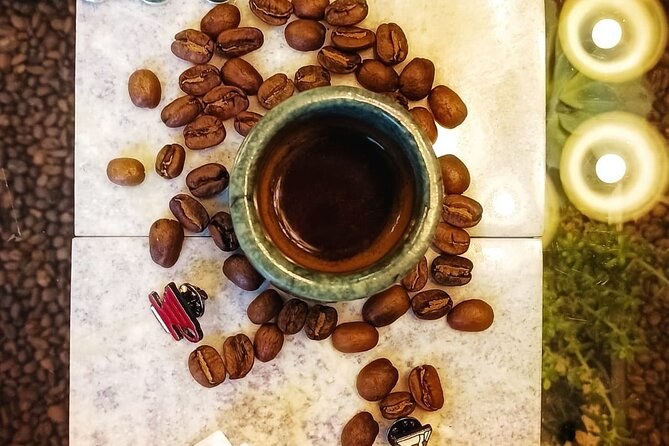
Then a hand mill, slower than you expect, and a brew. Twenty minutes, green bean to poured cup, and the smell in that room is what people describe when they get home. The tastings page covers how to read the cup once it is in front of you.
What differs between an estate and a smallholding
The line is the same; the setting is not. On an estate the mill is a building, the patio is the size of a tennis court and a guide who does this daily walks you round. On a family plot the mill is in the yard, the patio is in front of the kitchen, and the person explaining it planted the trees.
- Estate: more machinery to see, a shop, a café, and often a museum on the same grounds.
- Smallholding: fewer stages mechanised, more of them done in front of you, and the roast usually in somebody's kitchen.
- Either way: the nursery, the plots, the mill, the patio and the roast. The decision guide weighs the two.
💡 Useful Tip Ask to see the parchment before it is hulled. It is the papery skin the bean wears from the patio to the dry mill, most farms have a handful lying about, and almost nobody thinks to ask. The farms page covers which farm each morning reaches.
What is happening on the farm in the month you visit
The same five places look very different in February and in August, and knowing which you are getting saves a certain amount of disappointment. In harvest months the plots have red fruit, the mill is running and the patio is covered; the whole line is live.
Out of season the plots carry green fruit or none, the mill is stripped and cleaned, and the patio is swept. What you lose is the picking; what you gain is a grower with nothing else to do that morning. The harvest page sets out what each month has on.
The things worth asking while you are standing there
- Which plot did this cup come from? On a smallholding the answer is a specific slope, and it changes how the coffee tastes.
- How many passes do you make over a tree? Four or five is normal, and it explains the whole labour economics of the crop.
- What do you do with the pulp? Most farms compost it back onto the plots; some make a tea from the dried skin.
- How long has this been in the family? Frequently three generations, and it is usually the answer that turns the morning into a conversation.
- When was this roasted? Ask before you buy beans — the tastings page covers what else to ask for.
How long you need to see it properly
Two hours at a walk covers all five places without hurrying. An hour gets you the plots, the mill and the roast and skips the rest. Three hours lets you stop, ask, and try the picking in season.
That is the figure worth comparing before price, and Antigua Coffee Tours shows it for every departure. If you would rather see the whole thing from a bicycle, the formats post sets the three ways of getting there against each other.
Next: the process itself, station by station, on the seed-to-cup page.