How to Visit the Antigua Coffee Farms: Tours, Prices and Timing
Short answer. There is no gate and no ticket: the farms are private and you book a place on a morning. Fares run from $38 to $122, almost all of them cover the farm and the transport, and every departure is finished by lunchtime. What changes month to month is whether the crop is being picked.
Most of what goes wrong on a first coffee morning in Antigua goes wrong for one of three reasons: people expect a visitor centre with an opening time, they expect to see picking in July, and they do not realise the farms are in four different villages. Fix those three and the rest is straightforward. This is the practical version, and a coffee tour Antigua Guatemala handles all of it for you.
Quick facts
| What you book | A place on a guided morning, not a ticket |
| Fares | $38 to $122 a person |
| Length | Two to five hours, always a morning |
| Start times | Between 8:00 and 9:30 |
| Where the farms are | Jocotenango, Ciudad Vieja, San Pedro Las Huertas |
| Harvest | late December to April |
| Admission | Inside the fare on every departure but one |
| What to wear | Closed shoes, long trousers, sun protection |
Why there is no ticket office
Coffee farms around Antigua are working businesses. Some are estates with a shop and a car park; most are family plots of a few hectares where the grower has a day's work to do and shows visitors round because it pays better than the cherry does. Neither kind runs a turnstile.
What that means for you is simple: you book a morning through an operator, they arrange the farm, and the farm expects you. One departure is the exception and even that one asks you to meet it in a village square rather than turn up at a gate. The visiting page sets out how each pickup works.
What you pay, and what is inside the fare
The range is wider than the mornings are different. At the bottom you get a bicycle and four hours; at the top a mountain bike, a co-operative farm and lunch with the family who roasted your coffee.
| Band | What it buys | Example length |
|---|---|---|
| $38 – $45 | Guided on foot or by bicycle, transport included | 2–4 hours |
| $53 – $60 | Your own ATV, or a private van to two farms | 3–4 hours |
| $69 – $82 | Groups capped at ten, or coffee paired with cacao | 2.5–3.5 hours |
| $122 | Mountain biking, a co-operative farm and lunch | 4–5 hours |
Almost every fare covers the transport, the guide, the farm and the coffee. Gratuities are usually excluded and are customary; beans to take home are bought on the day. One private tour excludes admission to both the estates it visits, so you pay at each gate — it is the only one that does, and the cost guide works the whole thing through line by line.
💡 Useful Tip Carry small notes in quetzales. Beans, tips and the two estate gates all want cash, and a smallholding a mile up a farm track has no card machine. The tastings page covers what to buy and what to ask for.
Where the farms actually are
Antigua sits in a valley closed by three volcanoes, and the coffee grows on the slopes around it rather than in the town. Which village you end up in depends entirely on which morning you book, and they are all inside half an hour.
- Jocotenango, ten minutes north, holds Finca La Azotea — the estate the ATV and bicycle mornings ride to.
- Ciudad Vieja, twenty-five to thirty minutes south-west, is where three separate operators take you to smallholdings.
- San Pedro Las Huertas, fifteen minutes south, has the eco-farm and the seed-to-cup morning.
- San Miguel Escobar, on the edge of Ciudad Vieja, is co-operative land and the base for the growers' tour.
The farms page takes each of them one at a time, with the table of which departure goes where.
Getting there and getting collected
Most mornings collect you from your hotel inside Antigua. Three ask you to meet them instead, at Casa del Jade a block east of the plaza, at an office on 6a Avenida Norte, or at the fountain in the central park. Only one starts outside town, in San Pedro Las Huertas, and a local bus does that for a few quetzales.
Nothing collects from Guatemala City. Come to Antigua first — the shuttle takes about an hour — and book the coffee for the following morning.
What actually happens on the farm
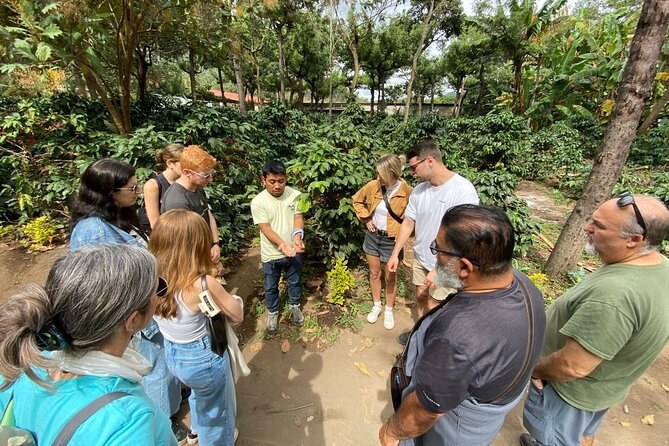
The shape is the same everywhere, whatever you paid. You walk the plots and see the trees at whatever stage the year has them at; you see the depulper, the fermentation tank and the drying patio; then somebody roasts a batch in front of you, usually over a fire, grinds it by hand and pours it.
Green bean to poured cup takes about twenty minutes, and it is the part people describe afterwards. If you want the whole chain rather than a highlight of it, take a morning that gives you two hours or more on the ground. The process page follows every stage in order.
When to come, and what the month changes
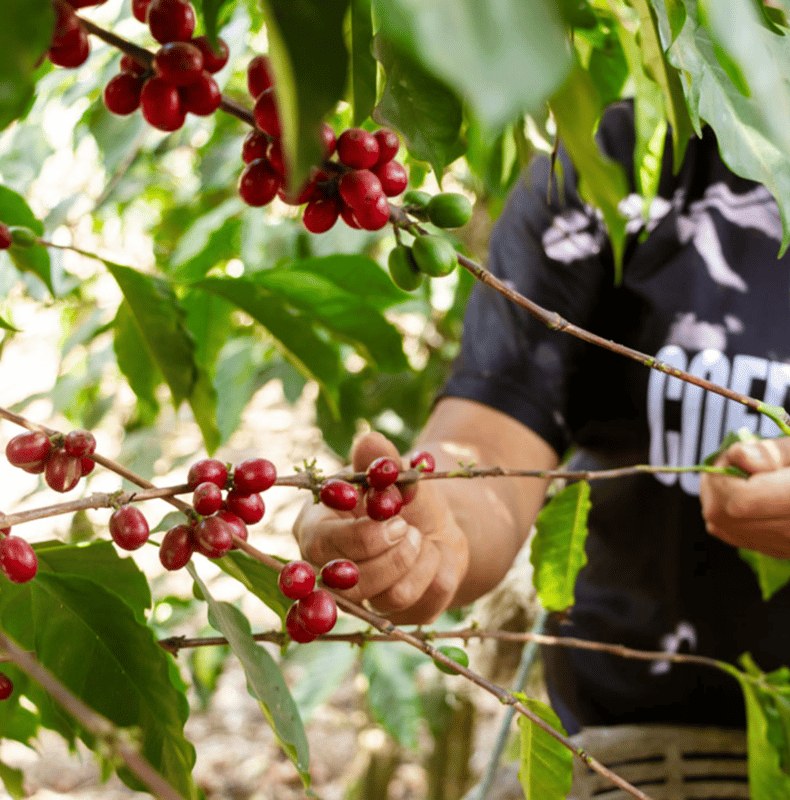
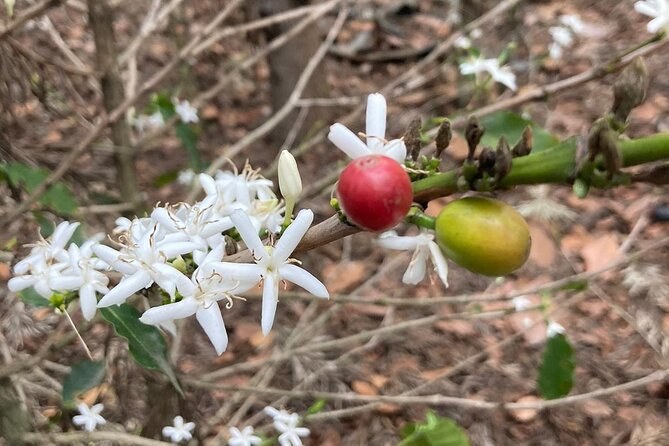
The first ripe cherries come off in late December and picking runs January through April, sometimes into the first days of May. Come inside that window and you can fill a basket yourself, watch the depulper running and see a patio covered in drying beans. Come in August and the fruit is green on the branch, the patio is swept and the mill is being maintained.
Neither is a wasted morning, and the roasting and the tasting are identical in both. It is worth knowing which you are getting, though, because most people picture the first one. The harvest calendar goes month by month.
🌿 Did You Know? Antigua takes only 32 to 48 inches a year — not much for coffee. The reason it works is volcanic pumice in the soil, which soaks up what does fall and releases it slowly. Fuego keeps topping the soil up with fresh ash.
What to wear and what to take
- Closed shoes with grip. The plots slope and the paths are earth rather than gravel.
- Long trousers. One listing asks for them by name, against the mosquitoes on the plantation trails.
- Sun protection you can reapply. The shade on a coffee farm is over the coffee, not over you.
- Cash in quetzales. Beans, tips and two estate gates.
- A light waterproof from May to October. The rain comes in the afternoon, usually after you are back.
How the rest of your day works
You are back in town between eleven and one, which is the strongest argument for booking the coffee on your first full day: you reach the plaza already knowing what the valley grows. Lunch, the cathedral ruins, the arch and the climb to Cerro de la Cruz fill the afternoon comfortably.
What will not fit is a volcano, because Acatenango is an overnight climb and Pacaya takes an afternoon and an evening. The things-to-do page lays out an hour-by-hour version, and the with-kids post covers what changes when the party is younger.
Which morning to book
Work backwards from what you want out of it. If you want the grower's own story, book a smallholding; if you want a shop, a café and a museum on the same site, book an estate. If the ride matters more than the roast, one of the bicycle or ATV formats will suit you better than either.
Antigua Coffee Tours compares every departure with the hours on the farm shown for each, and the decision guide takes the first of those choices apart properly.
Next: pick your month on the harvest calendar, then choose the farm on the farms page.