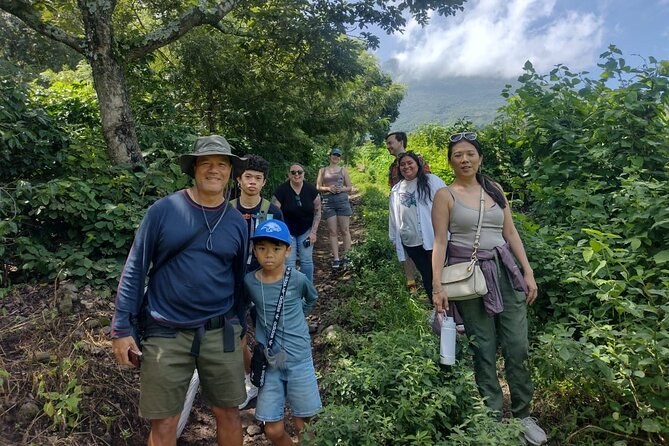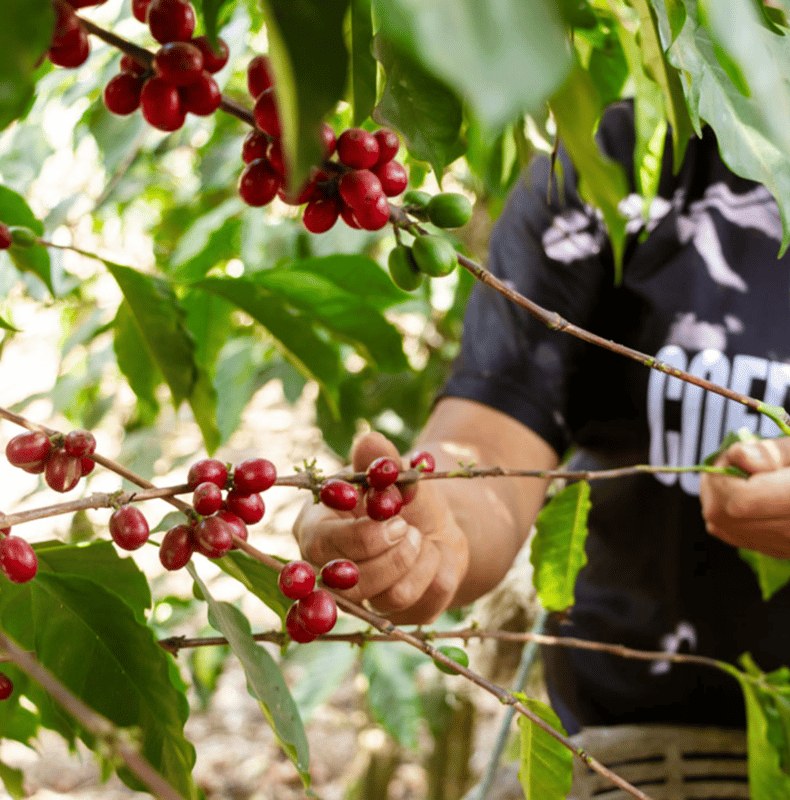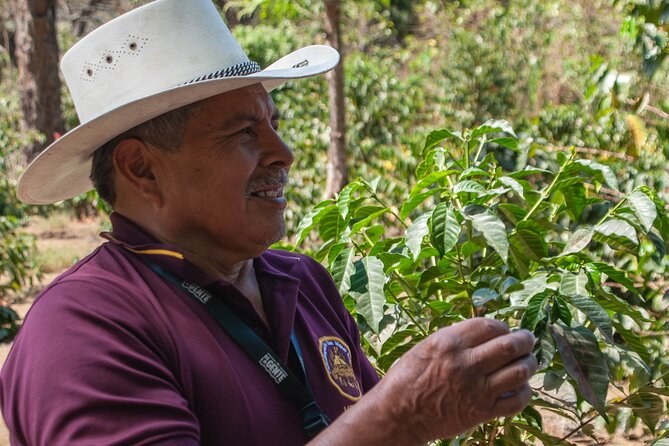
Visiting an Antigua Coffee Farm Without a Tour
Short answer. Mostly you cannot, and that is the honest answer. The farms are private working businesses with no gate and no opening hours, and almost all of them open only to booked groups. One departure comes close to independent, and the town roasteries are a real alternative if all you want is the coffee.
It is a fair question and most guides dodge it. If you can walk into a museum for a few dollars, why pay $45 to be driven twenty minutes to a farm? The answer is not the one the operators would give you, and it is worth setting out properly before you spend anything. A De La Gente coffee tour Antigua Guatemala is the usual solution, but not the only one.
Can you visit an Antigua coffee farm on your own?
Almost never. These are not attractions. A smallholding around Ciudad Vieja is a family home and a few hectares of trees, and a stranger at the gate is an interruption to a working day rather than a customer. There is no ticket office to buy anything from.
The estates are a partial exception, because Finca La Azotea in Jocotenango runs a cultural centre with a coffee museum and charges admission. Even there, the guided walk through the plots is arranged rather than wandered into.
What is actually stopping you?
- No public opening hours. Nothing publishes a time you can turn up at.
- No signage. Coffee plots do not announce themselves from the road, and most are behind gates on unmarked lanes.
- Language. The grower will be working in Spanish, and the interesting part of the morning is the conversation.
- Nothing to see without a guide. A depulper is a machine; the reason it matters is somebody explaining what it does to the cup.
- Distance. Ten to thirty minutes by road to each village, on routes with no obvious walking option.
The one departure that comes closest to independent
The seed-to-cup morning at San Pedro Las Huertas meets you at the village bus station rather than collecting you, and it excludes private transport by name. You get yourself there, a local grower takes it from there, and it costs $45.
That is as close to walking up as this valley gets. It also tells you what the transport is worth on every other departure: about the price of a bus ticket, plus the certainty of being in the right village at the right hour.
What does the local bus cost?
Local buses run from the terminal behind the market in Antigua to Ciudad Vieja, San Miguel Escobar, San Pedro Las Huertas and Jocotenango through the day. They are old American school buses, they leave when full, and the fare is a few quetzales.
They will get you to a village. What they will not do is get you onto a farm, which is the part that needs arranging. The farms page sets out which village each departure works in.
⚠ Before you plan an independent morning. The plots are private property and several sit behind working gates. Walking in uninvited is trespass rather than initiative, and it is the sort of thing that makes the next visitor unwelcome. If you want a farm without a group, the smallholder mornings cap at ten and one of them regularly runs with two people.
What a booked morning buys that you cannot arrange
Access, first. Somebody has already agreed with a family that you are coming, which is the whole difference between a farm visit and a walk past a farm.
Then the explanation. The line from nursery to cup takes about four years and the interesting parts of it are invisible — fermentation, altitude, the reason the cherries are picked five times. And then the roast, which almost nobody would let a stranger stand over. The process page covers what you would be missing.
Booked against independent, line by line
| Booked morning | On your own | |
|---|---|---|
| Getting there | Included on ten of the departures | A few quetzales on a local bus |
| Access to a farm | Arranged | Effectively none |
| A guide | Included | None |
| The roast and tasting | Included | Not available |
| Buying beans at source | Yes | Only in town |
| Time it takes | 2–5 hours | A morning, with no guarantee |
| Cost | $38–$122 | Under $5 |
| What you actually get | The whole process | A village and a view |
Is a town coffee shop a substitute?
For drinking the coffee, genuinely yes. Antigua has a dozen roasteries within a few blocks of Parque Central, several of them buying directly from the farms these mornings visit, and you can drink very good Antigua coffee for the price of a cup.
For understanding it, no. A café can pour you the result; it cannot show you a branch carrying three colours at once, or hand you a rake on a drying patio. If your interest stops at the cup, save your money and spend it on beans.
When going alone is genuinely the better call
- You have half a day and no interest in agriculture. Drink the coffee in town and see the ruins instead.
- You are on a tight budget. A bus to Ciudad Vieja and a bag of beans in town costs under ten dollars.
- You have already done a farm elsewhere. The process is the process, and a second one adds less than the first.
- You are here in September. Nothing is being picked, and a roastery cupping in town may teach you more that week.
When it is not
If the reason you came to Antigua is the coffee, going alone will cost you the thing you came for. There is no independent route onto a working plot, no way to watch a fermentation tank being emptied, and no substitute for a grower explaining a year of their own work.
At $38 the cheapest booked morning is less than dinner, and it includes the bicycle. That is the arithmetic most people find decisive.
What about the co-operatives that sell direct?
Some of the growing families around San Miguel Escobar and Ciudad Vieja sell their own coffee and run their own visits, which is what the co-operative morning is. Booking through a platform rather than approaching the family directly is not a middleman problem so much as a language and logistics one: somebody has to agree a date, arrange the transport and translate.
What that buys the family is a steady stream of visitors rather than an unpredictable one, and it is why several of these mornings exist at all. The money still reaches the household; you are paying for the arrangement, not for permission. The farms page names the villages involved.
Can you do it more cheaply with a group?
Not usually. Every fare here is per person, and the two listings that set a minimum party size do it because the departure will not run below it rather than to offer a discount. One private morning needs four travellers, which for a family of four turns a threshold into a convenience.
Where a group does help is the group cap: six departures cap at ten or fewer, so four of you booking together can effectively fill most of a small-group morning. That is closer to a private tour than the fare suggests, and it is the cheapest way to get a grower's full attention.
How to get the most out of a booked morning
Ask for the smallest group you can find — six of the departures cap at ten or fewer — and take one that gives you two hours or more on the plots. Bring cash for beans and ask which plot yours came from.
And book a village smallholding rather than an estate if the human side is what you want, which is the choice the decision guide takes apart. Antigua Coffee Tours shows the group cap and the farm time for every departure.
What about the coffee museum?
Finca La Azotea in Jocotenango has a cultural centre on the same grounds as the plantation, and it includes a coffee museum along with a collection of Maya instruments. It charges admission, and it is the closest thing in this valley to somewhere you can pay at a desk and walk in.
Published opening hours differ between sources, so confirm directly before you set off rather than relying on a listing. And know what it is: a museum about coffee on a working estate, rather than a walk through the plots with somebody who farms them. The two departures that ride there include the estate visit; the private van morning excludes the admission and expects you to pay at the gate.
If your interest is the history and the machinery rather than the growing, that is a genuinely good half-hour and it costs a fraction of a tour. If it is the crop, it is not a substitute. The farms page explains what else is on that site.
Frequently asked questions
Can I walk to a coffee farm from Antigua?
Not usefully. The nearest plots are in Jocotenango, ten minutes by road, and the routes are not walking routes. The farms themselves are private and will not open a gate to a stranger.
Is there a coffee museum I can just visit?
Finca La Azotea in Jocotenango has a cultural centre with a coffee museum on the same grounds, and it charges admission. Confirm the opening times directly before you set off, because published hours differ between sources.
Can I buy coffee without doing a tour?
Easily. A dozen roasteries sit within a few blocks of Parque Central and several buy from these same farms. You will pay more than at the farm gate and it will still be very good coffee.
What does the bus to Ciudad Vieja cost?
A few quetzales, from the terminal behind the market. It runs through the day and leaves when it is full. It will get you to the village and no further towards a farm.
Is the cheapest tour a compromise?
No. The $38 bicycle morning gives you two hours at a working estate, the bike, snacks and every fee. It is the best value in the valley and nothing about it is cut short — the formats post compares it with the alternatives.
Next: the fares, in full, in the cost guide.